
Pet X-Rays & Ultrasound in Shelby Township
Shelby Veterinary Hospital provides pet imaging services—including X-rays and ultrasound—for dogs and cats in Shelby Township. When something is happening inside your pet’s body that we can’t assess from the outside, diagnostic imaging gives our team a clearer path toward wellness.
What Are Pet X-Rays & Ultrasound?
Pet X-rays and ultrasound are two of the most widely used diagnostic imaging tools in veterinary medicine. Each serves a distinct purpose, and together they give our team a comprehensive view of your pet’s internal structures—supporting more accurate diagnoses and better-informed treatment decisions.
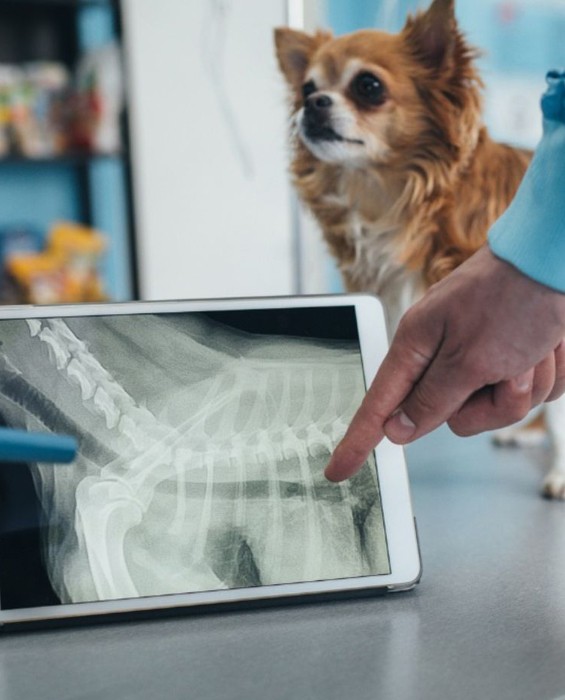
Veterinary radiology—pet X-rays—uses radiation to produce images of dense internal structures such as bones, joints, and certain organs. X-rays are particularly valuable for evaluating skeletal injuries, joint changes, lung conditions, bladder stones, and the overall size and position of internal organs. They are fast, non-invasive, and can often be performed with minimal sedation.
Ultrasound uses high-frequency sound waves to produce real-time images of soft tissue structures—things that X-rays cannot capture in detail. A vet ultrasound can evaluate the internal architecture of organs such as the liver, kidneys, spleen, bladder, and heart, detect fluid accumulations, assess masses, and provide information about blood flow and tissue texture. It is also non-invasive and does not involve radiation.
What to Expect at Your Pet’s Imaging Appointment
Diagnostic imaging at Shelby Veterinary Hospital is handled with the same care and attention we bring to every aspect of your pet’s visit. Here’s what a typical imaging appointment may include:
A clinical assessment before imaging begins
Before any imaging is performed, your veterinarian will review your pet’s history, discuss the reason for imaging, and explain what we’re looking for and why. Understanding the clinical question we’re trying to answer helps us choose the right imaging approach and interpret results in the appropriate context.
Positioning and patient preparation
For X-rays, your pet will be gently positioned to capture the views needed. Most pets tolerate this well, though some may require mild sedation to stay still enough for clear images—particularly if they are in pain or anxious. For ultrasound, a small area of fur may be clipped and gel applied to the skin to allow the transducer to make proper contact. We handle every patient with patience and gentleness throughout.
Image capture and on-site evaluation
Images are captured and reviewed by our veterinary team on-site. We evaluate findings in the context of your pet’s full clinical picture—because imaging results are most meaningful when interpreted alongside physical exam findings, lab results, and health history rather than in isolation.
A clear explanation of findings
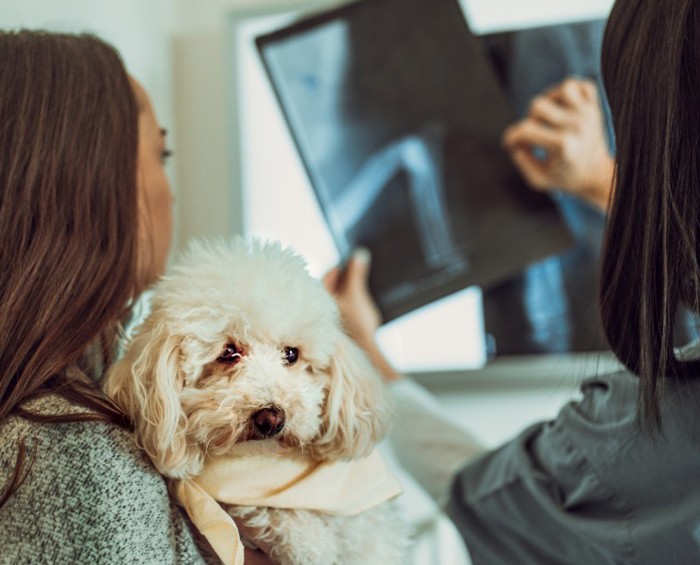
Once imaging is complete, your veterinarian will walk you through what the images show—explaining findings in plain language and discussing what they mean for your pet’s diagnosis and care plan. If further evaluation or specialist review is warranted, we’ll discuss that with you as well.
Why Pet Imaging Matters
Pet X-rays are invaluable for identifying fractures, arthritis, lung changes, and conditions like megaesophagus or bladder stones that may produce symptoms without an obvious external cause. Cat and dog ultrasound provides a window into organ health that is simply not available through any other non-invasive means—allowing our team to detect tumors, cysts, fluid, or structural changes within organs that appear normal on X-ray.
Early and accurate diagnosis leads to better outcomes. When we can identify what’s happening—and where—we can recommend treatment that is targeted and appropriate rather than based on assumption. For conditions that respond best to early intervention, imaging is often what makes the difference between catching something in time and missing it.
Imaging also plays an important safety role in surgical planning and pre-procedural evaluation, helping our team understand your pet’s internal anatomy and identify any concerns before a procedure begins.
Related Services
To investigate findings identified during a routine physical assessment
To combine bloodwork with imaging for a more complete diagnostic picture
To support pre-surgical planning and post-operative evaluation
To identify structural sources of discomfort in joints, soft tissue, or internal organs
To monitor internal changes that commonly accompany aging in older pets
To understand how dental X-rays support oral health diagnosis and treatment planning
FAQs About Pet X-Rays & Ultrasound
Is pet X-ray radiation safe for my pet?
Will my pet need to be sedated for imaging?
How long does an imaging appointment take?
What if the imaging reveals something concerning?
Can imaging detect all health problems?
Clearer Answers for Better Pet Care
When your pet needs answers, having the right diagnostic tools makes all the difference. At Shelby Veterinary Hospital, our imaging capabilities allow us to look beyond the surface and give your pet’s care the accuracy and confidence it deserves. Whether we’re investigating a specific concern or supporting a planned procedure, our team uses every tool available to understand what’s happening inside—and to act on that knowledge in the best interest of your pet.